
Notre Dame: In My Memory
I. Notre Dame Under a Dark Sky
II. Notre Dame in the Daylight
Notre Dame Under a Dark Sky
I visited Paris in March of this year with my mother and sister. We had scraped together enough money to spend a week there as a graduation gift for my sister, the kind of trip that had lived mostly in conversation and imagination before somehow becoming plane tickets, a hotel reservation, and three of us walking through Paris together.
We stayed in Saint-Germain-des-Prés, which meant that many of our days began and ended on foot. Our second night there, we wandered through the streets of the sixth arrondissement, crossed into the Latin Quarter, and ended up standing in front of Notre Dame.
By then, the daylight had disappeared.
The crowds that usually gather across the parvis were gone, and the square felt almost strangely empty. Notre-Dame stood ahead of us beneath a dark sky, its western façade illuminated against the night.
During the day, it is easy to become absorbed in the individual details of the cathedral. There are portals crowded with carved figures, rows of saints and kings, arches within arches, tracery, stonework, and the enormous rose window. Your eyes have dozens of places to go.
At night, I noticed its shape first.
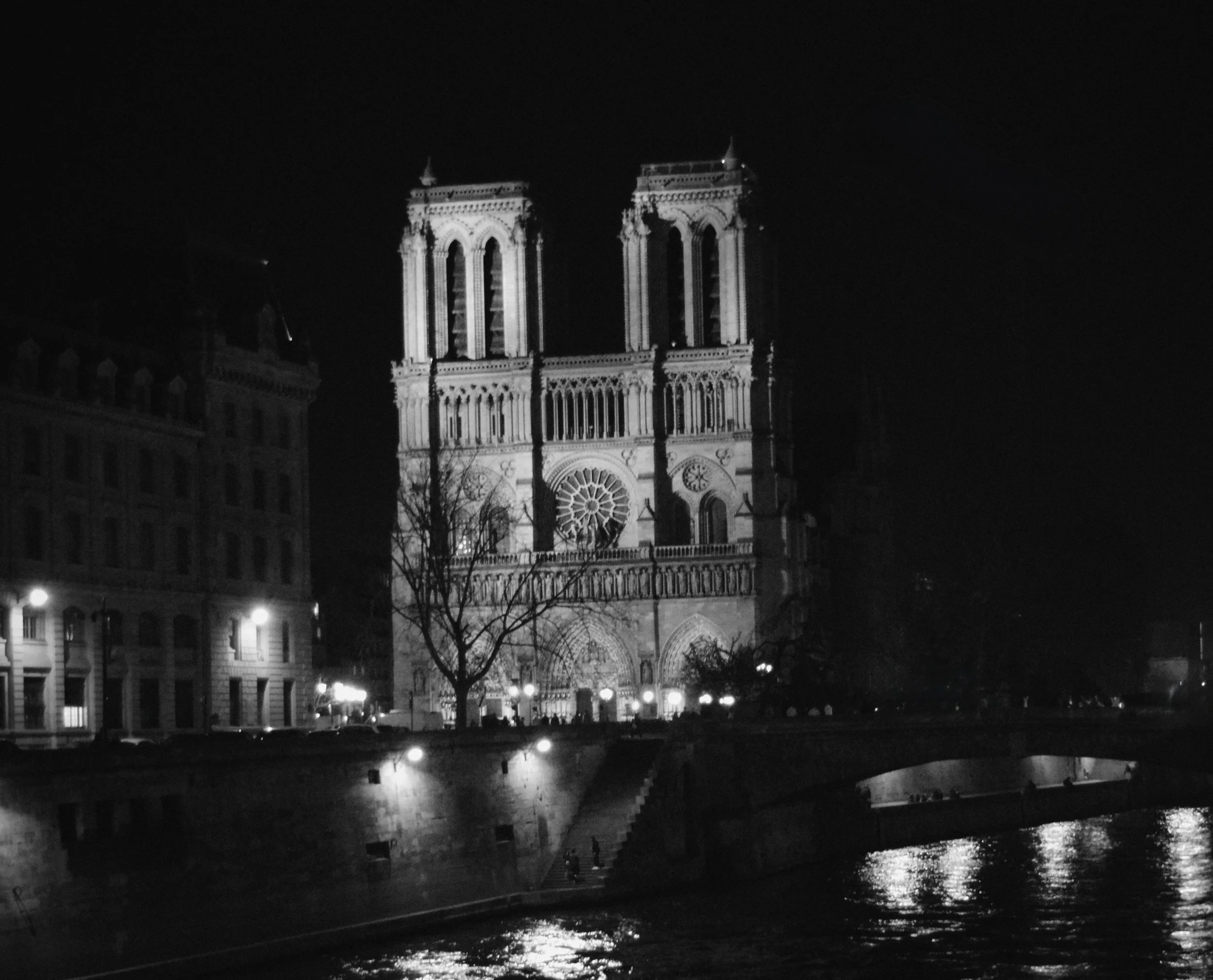
The towers rose almost directly above us, and with so few people around, there was nothing to compete with the scale of them. We stood beneath the façade looking upward, three people in an enormous empty square.
There was no event happening. Nothing particularly dramatic occurred. We simply stood there.
And somehow, that is one of the moments from Paris that I remember most clearly.
I remember eventually knowing that we should start walking back to the hotel and not really wanting to.
We would walk a little farther, and I would turn around.
Then again.
And once more when we were nearly far enough away that the cathedral would disappear behind the buildings.
I kept looking back for one last glimpse.
Notre Dame in Daylight
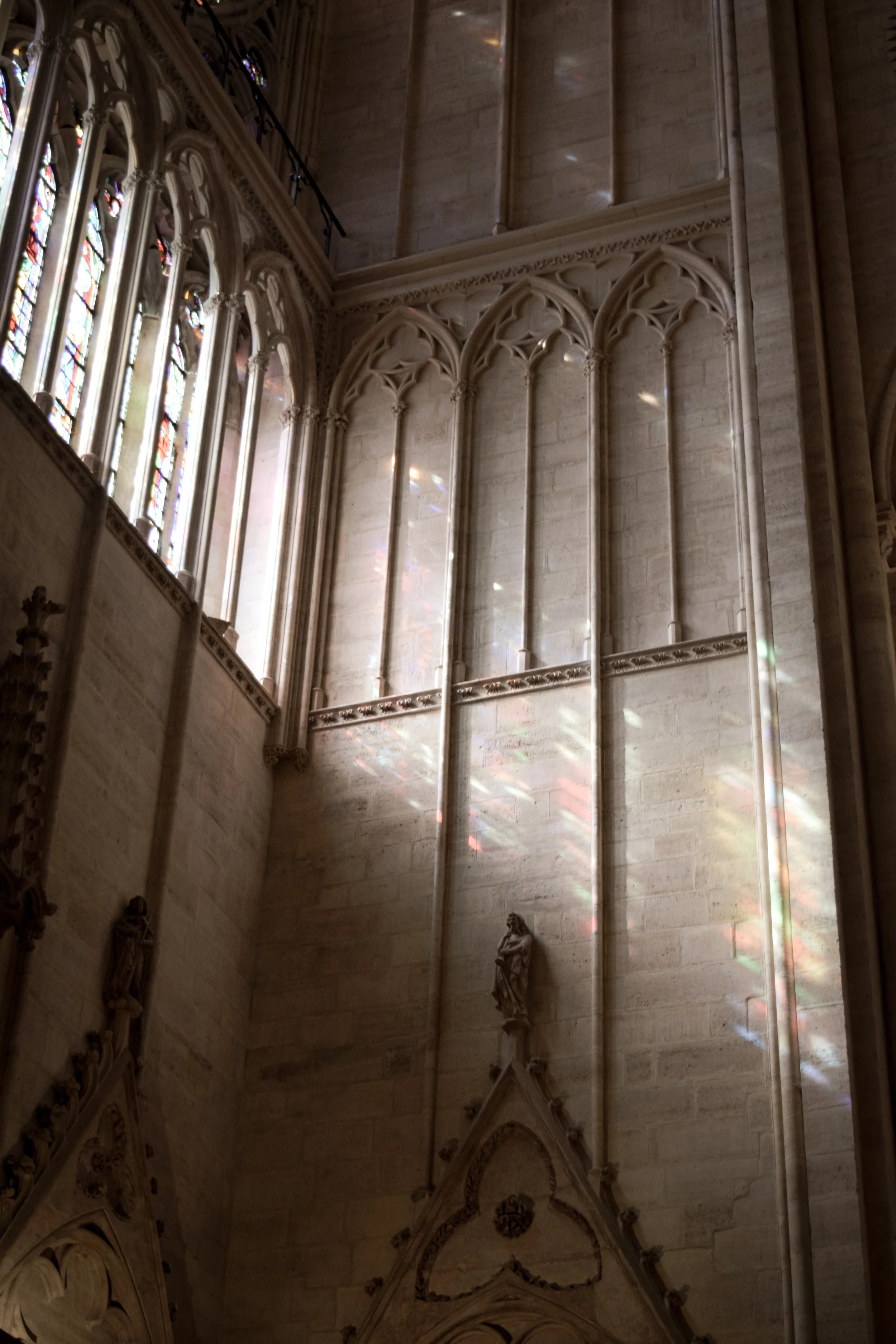
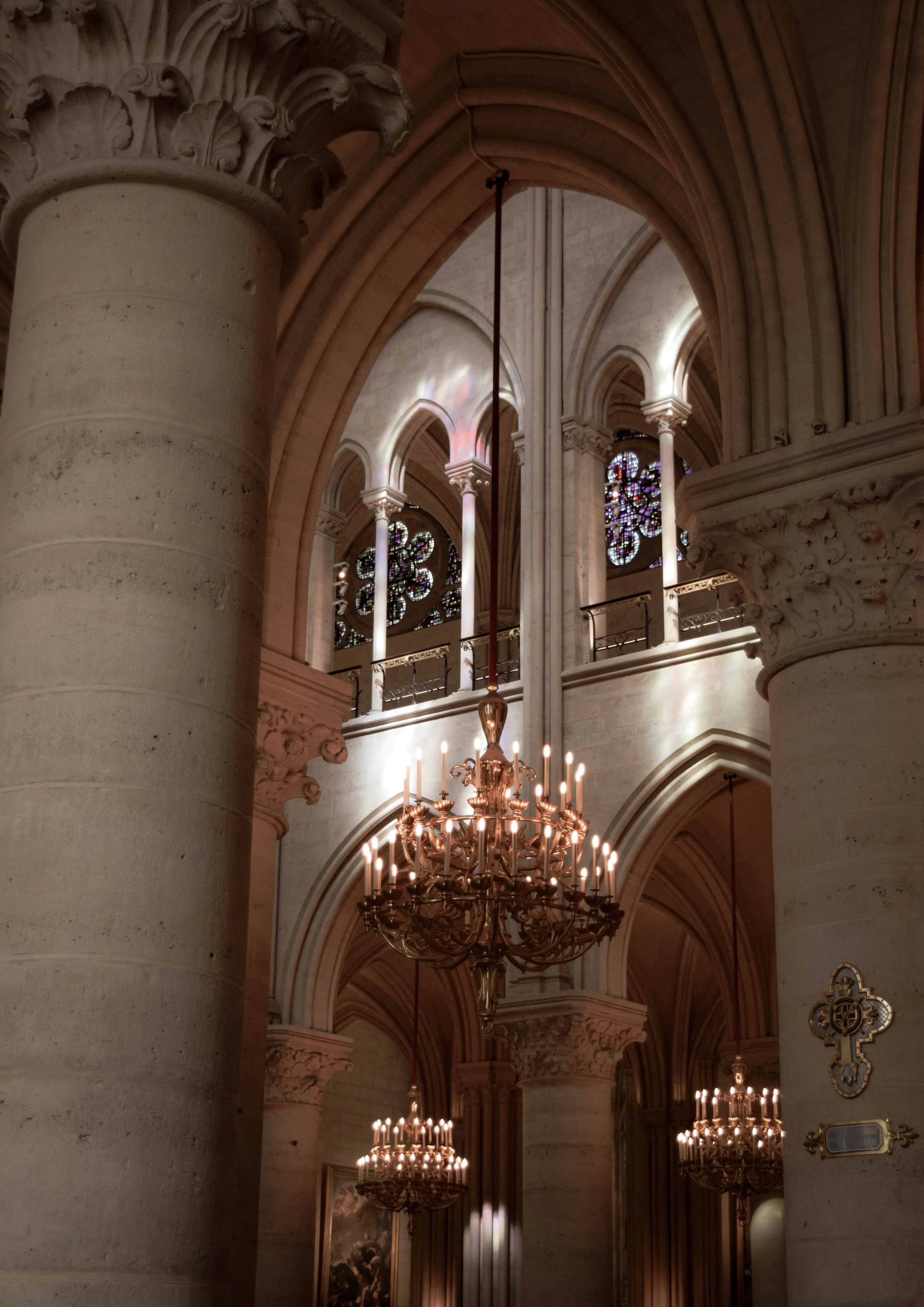
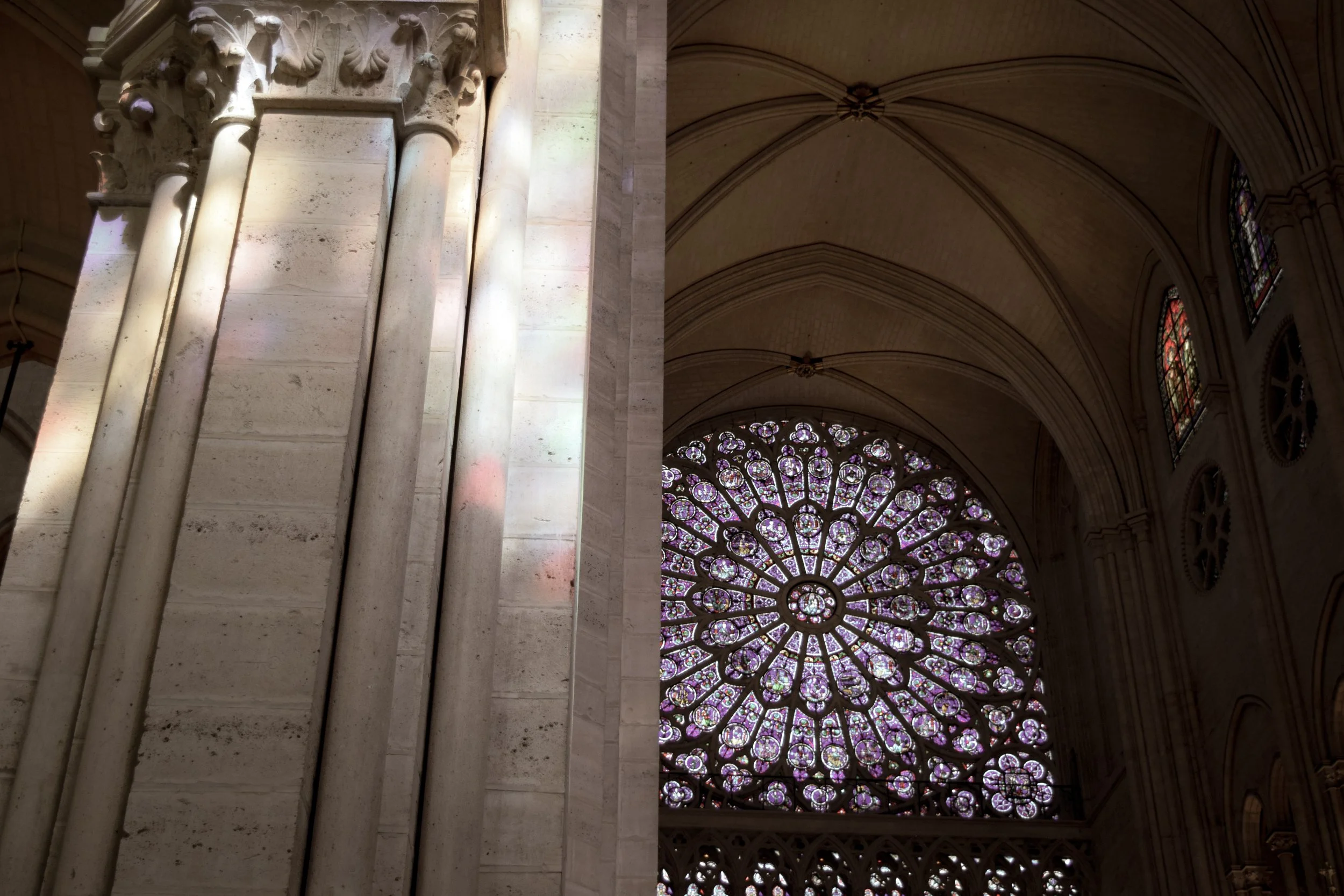
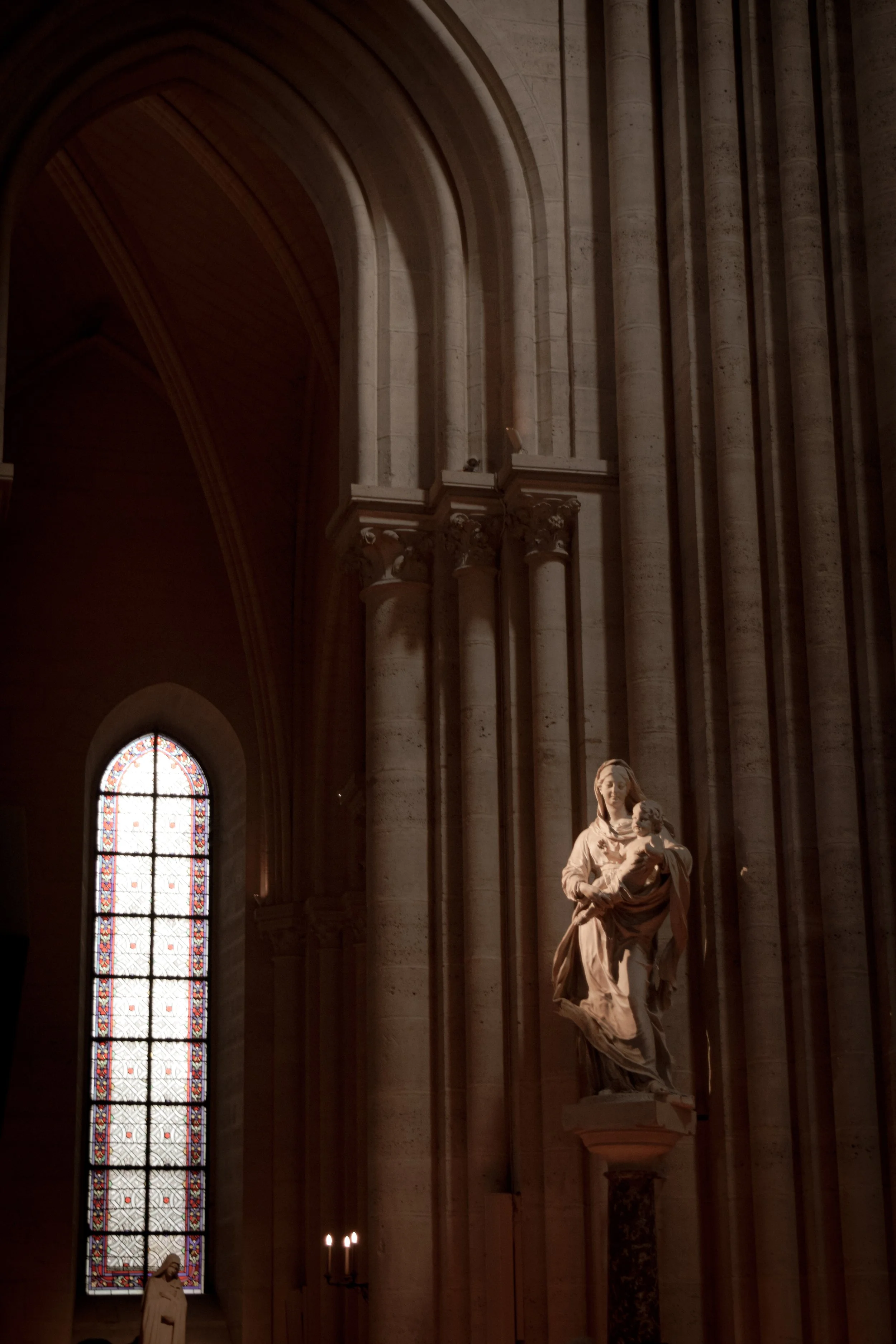
What I remember most is the light.
Sunlight passed through the stained glass and broke apart as it entered the cathedral. Instead of simply illuminating the interior, it left fragments of color across the pale stone, small patches of blue, red, violet, and gold appearing on walls and columns.
I had seen stained glass before. I understood, of course, what happens when sunlight passes through colored glass. But there was something different about seeing those colors scattered across stone that had been standing there for centuries.
The windows themselves naturally draw your attention, especially the great rose windows. They are enormous and intricate enough that you could spend a long time trying to follow their patterns.
But I found myself looking at what the windows were doing to everything around them.
A patch of color would appear across a column. Another would stretch unevenly over a carved surface. As the light changed, the shapes shifted with it.
For a building made from so much stone, the interior could feel surprisingly alive.
And unlike the architecture surrounding it, the light couldn't be preserved. The exact pattern I saw existed only because I happened to be standing there at that particular time, on that particular day.
Perhaps that is why I remember it so clearly.